

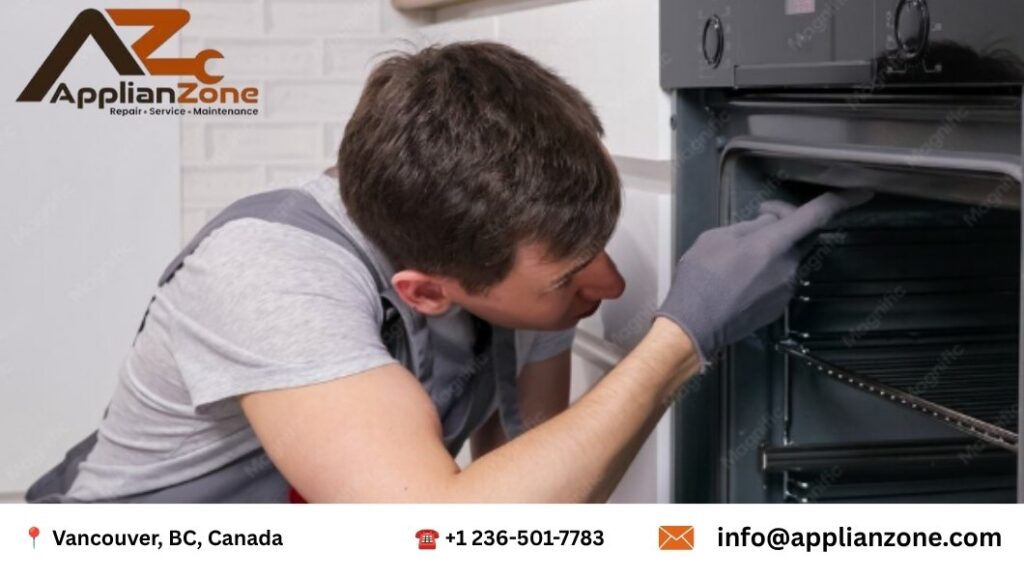
There is nothing quite as annoying as preparing dinner, turning on the oven, and realising it is barely getting warm.
Maybe the display still works. Maybe the light comes on. Maybe the oven even sounds like it is running normally. But your food is taking far too long to cook.
Before you start shopping for a replacement, take a moment to figure out what is actually going wrong. An oven that stops heating does not always mean the whole appliance has reached the end of its life.
Sometimes, one faulty component is all that needs attention.
This guide looks at some of the most common oven questions homeowners ask, from repair costs and appliance lifespan to when replacement may make more sense.
Can a Broken Oven Be Fixed?
In many cases, yes.
An oven is made up of several parts that work together. Depending on the model, these can include heating elements, temperature sensors, thermostats, igniters, control boards, switches, wiring, and door components.
When one part fails, the oven may stop working properly.
For example, an electric oven may have a heating element problem, while a gas oven may have an ignition issue. A temperature sensor problem can also cause an oven to heat incorrectly.
The tricky part is that different faults can sometimes produce similar symptoms.
That is why it is better to find the cause before buying a replacement.
If you are looking for Appliance Repair Near Me, choose a service that can inspect the appliance and explain what is actually wrong rather than simply replacing parts based on the symptom.How Much Does It Usually Cost to Fix an Oven?
There is no fixed price for oven repair.
The cost can change depending on the model, the faulty component, parts availability, labour, and how difficult the repair is.
A simple component replacement is very different from a complicated electrical or control problem.
If you contact a repair company, have these details ready:
- Oven brand
- Model number
- Gas or electric type
- What the oven is doing
- When the problem started
- Any error code
- Whether it heats at all
- Any unusual smell or noise
These details can give the technician a better idea of what may be happening.
It is also worth being careful with very cheap repair estimates given without an inspection. If the wrong component is replaced, you could end up paying twice while the original problem remains.
What Is the Most Common Oven Problem?
One of the most common complaints is simple: the oven is not heating properly.
You might notice that:
- The oven stays cold.
- It takes much longer to heat.
- Food is cooking unevenly.
- The oven cannot maintain the selected temperature.
- The display works but the oven does not heat.
- The oven switches off unexpectedly.
- An error code appears.
There are several possible reasons behind these symptoms.
A heating element, temperature sensor, thermostat, ignition system, control board, or electrical connection could be involved.
This is why the details matter.
Does the oven heat a little but never reach the right temperature? Does it stay completely cold? Does the problem happen every time or only occasionally?
The answers can help narrow down where the problem may be.
If your range or cooktop is also causing problems, Stove Repair Services may be more appropriate than treating the oven issue separately.
What Is the Average Lifespan of an Oven?
There is no exact number of years that applies to every oven.
How long an oven remains reliable depends on several things, including how often you use it, how well it is maintained, how it was installed, and the condition of its individual components.
That means an older oven is not automatically a bad oven.
If an older appliance has been reliable and only needs one reasonable repair, keeping it may make sense.
On the other hand, an appliance that has developed repeated problems may become more difficult to justify repairing.
Regular care can also help. Following the manufacturer’s cleaning and maintenance instructions, keeping the oven door seal in good condition, and dealing with small problems early can all help maintain normal operation.
Natural Resources Canada provides guidance on buying and operating cooking appliances, including information about energy use and maintenance. Natural Resources Canada — Cooking Appliances
How Much Does a New Oven Cost?
There is no single price for a new oven either.
The final cost depends on the type, size, brand, features, installation requirements, and other factors.
And the purchase price is only part of the picture.
You may also need to think about:
- Delivery
- Installation
- Removal of the old appliance
- Electrical requirements
- Gas connection requirements
- Warranty
- Replacement parts
- Future servicing
If you are replacing an electric oven, energy information can also help when comparing different models.
Natural Resources Canada explains that the EnerGuide label can help consumers compare energy consumption between applicable appliances. Natural Resources Canada — EnerGuide for Appliances
So when comparing repair with replacement, look beyond the sticker price of a new oven.
Where Can I Get My Appliances Repaired in Vancouver?
Finding a repair company is only part of the process.
You also want someone who works with your type of oven and can explain the problem clearly.
Before booking a service, you can ask:
- Do you service my oven brand?
- Do you work on gas and electric ovens?
- Can you diagnose the problem first?
- Are replacement parts available?
- Do you cover my area?
- Will I receive an explanation before the repair begins?
If your oven is needed for everyday cooking, Same Day Appliance Repair may be useful when a suitable appointment is available.
The same applies if another essential household appliance stops working. Getting the problem assessed promptly can prevent a small issue from becoming a bigger inconvenience.
When Should You Stop Using an Oven?
Some oven problems are more than just an inconvenience.
If you notice smoke, sparking, a burning smell, damaged wiring, an unusual gas odour, repeated breaker trips, or serious overheating, stop using the appliance until the problem has been properly checked.
Do not keep turning an appliance on and off just to see whether the problem disappears.
For gas appliances especially, unusual smells should be taken seriously. Health Canada provides guidance on safe use and maintenance of gas cooking appliances. Health Canada — Healthy Home Guide
Safety should come before getting one more meal out of a malfunctioning oven.
Final Things to Consider
An oven that stops working can make replacement seem like the easiest answer. But sometimes the problem is much smaller than it first appears.
Before spending money on a new appliance, find out what has actually failed.
If the oven is otherwise in good condition, a repair may restore it to normal use. If it is older, has had several repairs, or has multiple problems, replacement may deserve more consideration.
The best decision comes from looking at the whole picture rather than focusing on one number.
And if you notice a safety-related problem, do not keep using the oven simply because you are trying to avoid a repair. Getting the issue checked is far better than turning a small appliance fault into a larger household problem
Frequently Asked Questions
Can an oven that is not heating be repaired?
Often, yes. The cause could be a heating element, sensor, thermostat, ignition system, control component, or another issue. The exact cause needs to be identified before deciding on a repair.
How do I know if my oven needs repair or replacement?
Consider its age, condition, repair history, parts availability, and the type of problem it has developed. A single repair does not necessarily mean the appliance needs replacing.
Is oven repair expensive?
It depends on the oven and the fault. Parts, labour, model, and repair complexity can all affect the final cost.
How long should an oven last?
There is no fixed lifespan for every oven. Usage, maintenance, installation, model, and component condition all influence how long it remains reliable.
Should I repair an older oven?
An older oven can still be worth repairing if it is generally in good condition and has a manageable problem. Repeated failures may make replacement worth considering.
Can I repair my oven myself?
Basic cleaning and maintenance may be suitable for homeowners, but electrical, gas, and complex mechanical repairs can involve safety risks. Follow the manufacturer’s instructions and use qualified help when necessary.